
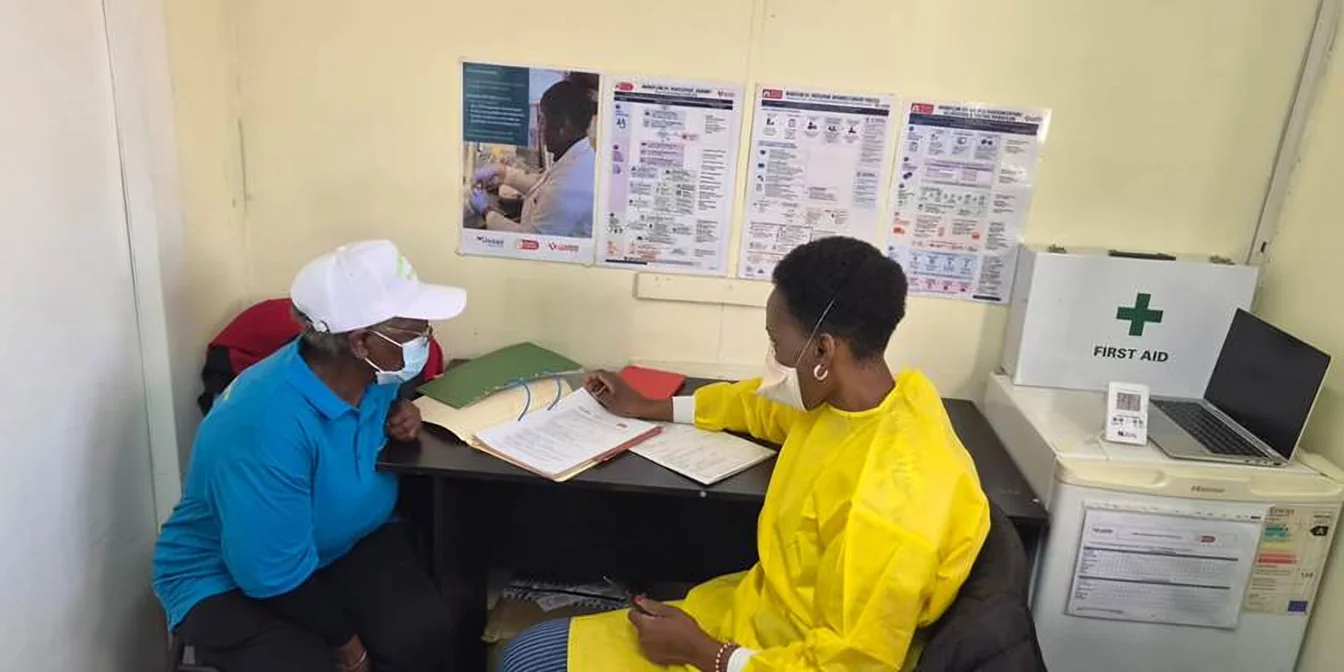
The DriveDx4TB TOO study has enrolled its first participants in South Africa, Indonesia, and Kenya, marking the start of a multi-country effort to accelerate access to better tuberculosis (TB) diagnostic tools.
When you are seeking TB care, getting a diagnosis involves more than taking a test. It involves travelling to a health facility, waiting for results, and returning for follow-up care. These practical challenges shape the context in which research takes place and influence how people navigate the health system while waiting to find out what comes next. These first enrolments are therefore more than a study milestone. It’s the beginning of research designed to generate evidence on new ways of bringing accurate TB diagnosis closer to the people who need it.
Research shaped by real-world needs
Led by the Aurum Institute and funded by Unitaid, DriveDx4TB TOO is being implemented in South Africa, Kenya and Indonesia. It will evaluate promising diagnostics for use in laboratories, primary healthcare facilities, and communities. These include point-of-care TB LAM tests, which detect a TB marker in urine and can provide results near the patient, and decentralised molecular tests, which identify TB genetic material using equipment that can be placed closer to where care is delivered.
Prof Violet Chihota, Aurum Group Chief Scientific Officer and Principal Investigator for DriveDx4TB TOO, says the study is built around a simple reality: no single diagnostic solution can meet every need.
“The goal is to generate evidence on tools suited to different settings and uses, helping countries expand access to high-quality TB diagnosis. Enrolling these first participants allows us to move from planning to implementation and accelerate the introduction of new diagnostic tools.”
In Indonesia, where geographical challenges can make access to TB diagnostic services difficult, the study will help evaluate the potential role of new diagnostic technologies in different healthcare settings.
“The enrolment of the first participant marks an important milestone for DriveDx4TB TOO in Indonesia, moving the study from preparation into implementation. It represents the beginning of our contribution to generating local evidence on emerging diagnostic technologies that could help address gaps in TB diagnosis.” – Prof Erlina Burhan, Professor of Respiratory Medicine and Respiratory Infection Consultant.
In Kenya, Joyce Odenyo Oluoch, a Community Advisory Board member at KEMRI CGHR in Kisumu County, highlights the barriers people can face when seeking a TB diagnosis.
“Stigma, fear, long distances to healthcare facilities and the cost of accessing care can all affect whether people seek TB diagnosis. Bringing testing closer to communities could help reduce some of these barriers and make diagnosis more accessible.”
For Tshilidzi Ndwambi in South Africa, Chairperson of Aurum’s Community Advisory Board in Tembisa South Africa, community involvement is essential. “Research should be done with the community, not just on the community.”
He also notes the barriers to TB care, including stigma, transport costs, long waiting times, fear, and limited access to information.
Khomotso Mphahlele, a Winnie Mandela Clinic Committee member also in Tembisa, sees these barriers first-hand. “Patients want a simple way of testing for TB so that they don’t spend time waiting for results.”
Evidence for change
The next milestone is to complete enrolment for the first wave of diagnostic technologies. The study will assess not only how accurately the tests perform, but also how practical and easy they are to use in decentralised settings.
The evidence generated will inform World Health Organization policy reviews and regulatory submissions and help countries access accurate, affordable TB diagnostic tools suited to different healthcare settings and patient needs.