
“The programme did not simply deliver against indicators; it strengthened health systems while expanding access to quality TB services for vulnerable communities.”
— Marinda Theron, Managing Director: Public Health Division
For more than three years, Aurum worked alongside government and communities as a Sub-Recipient of the Global Fund’s Grant Cycle 6 TB programme. Across three provinces, the team supported TB prevention, diagnosis and treatment, while helping to strengthen the health services that communities rely on.
By the time the programme closed in September 2025, it had delivered against an ambitious set of targets. During its final six-month extension, Aurum achieved 100% of its TB notification target, notifying 22 495 TB cases across the three districts. More than 168 000 people were screened using Digital Chest X-ray, bringing TB screening closer to communities and helping identify and link to care people who might otherwise have gone undiagnosed.
The numbers were significant, but they tell only part of the story.
“The programme did not simply deliver against indicators; it strengthened health systems while expanding access to quality TB services for vulnerable communities,” says Marinda Theron, Managing Director: Public Health Division.
It also strengthened something less visible, but just as important: Aurum’s ability to manage complex public health programmes, work across government and community structures, use data to improve services and build systems that can sustain progress.
That experience became the foundation for Aurum’s next major step.
In late 2025, Aurum was appointed Principal Recipient of the Global Fund’s Grant Cycle 7 programme for Key Populations, taking overall responsibility for delivery across eight provinces and 21 districts.
The appointment marked a meaningful shift. Aurum was no longer only supporting a grant; it was now leading one, with responsibility for the programme, its partners, resources and accountability from end to end.
For those who had helped build Aurum’s public health capability over the years, the significance of that progression was clear.
“This progression from SR to PR level is testimony to the strong confidence that national and international funders have in our capacity to deliver impactful results,” says Jacqueline Pienaar, Senior Technical Director: Key Populations.
That confidence is evident in how the new programme is being implemented.
The new programme builds on Aurum’s experience while responding to a different set of barriers to healthcare. It aims to reach 106 088 men who have sex with men, 12 801 transgender people and a defined cohort of people who inject drugs through community outreach, mobile services, Drop-In Centres and public health facilities.
At its heart is the same principle that shaped Aurum’s TB work: services must reach people where they are and respond to the realities of their lives.
For key populations, this can mean accessing care without first having to navigate stigma or explain who they are before they receive it.
That principle comes to life in the programme’s community-based model, where peer educators and healthcare workers work side by side to make services more accessible.
“When you walk into a Pop Inn Clinic and see a trans woman running the front desk, an MSM peer educator providing HTS counselling, and a NIMART nurse initiating ART in the same room, that is what being a PR is about.”
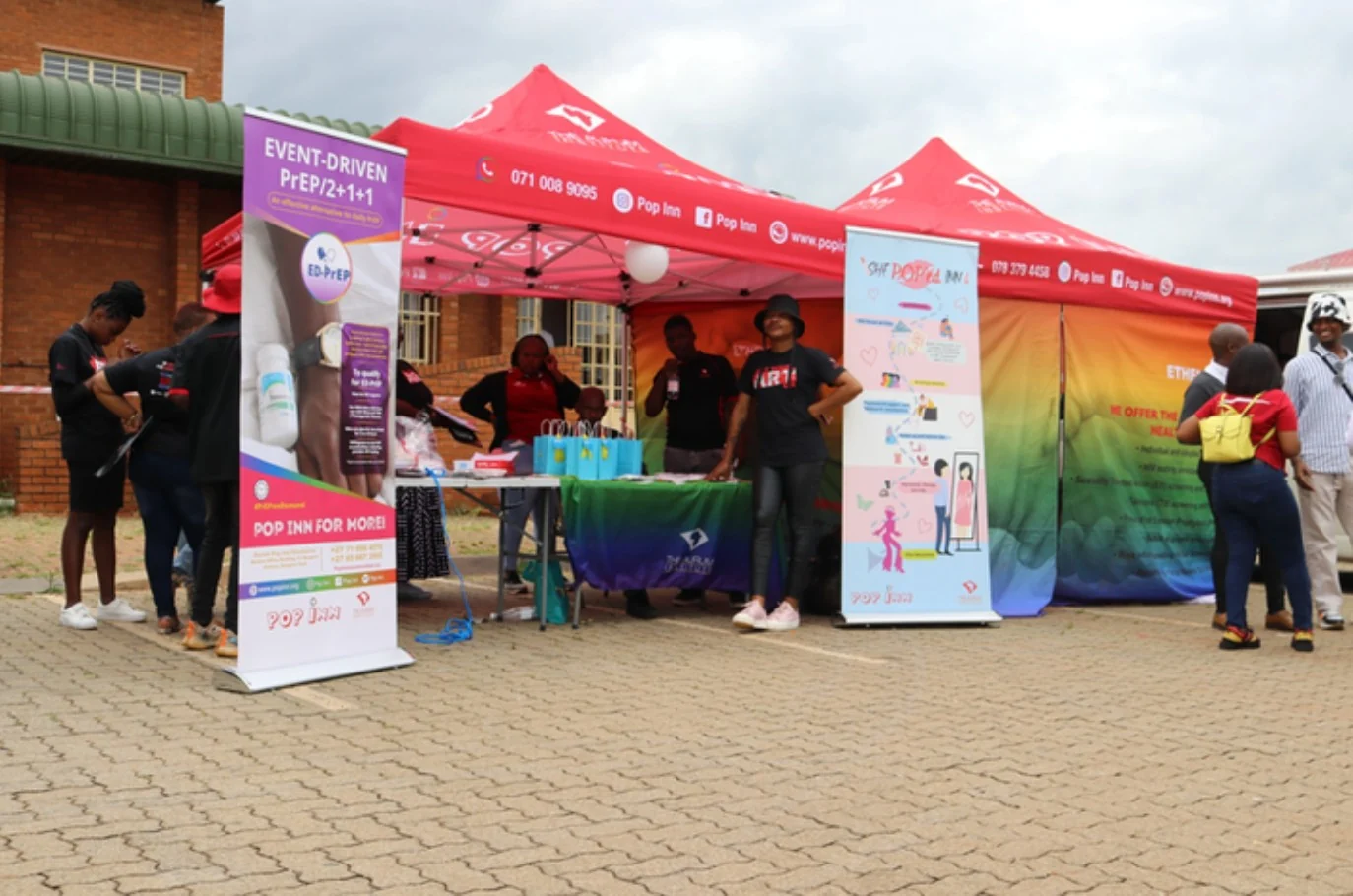
Aurum’s move to Principal Recipient came at a difficult time for global health funding, making trusted services and strong community partnerships even more important.
The significance of the new role, then, is not only the size of the grant or the responsibility it carries. It lies in what has been built along the way: the people, partnerships, systems and experience that enable Aurum to take on greater responsibility and translate it into better health outcomes.
And the ambition reaches beyond the life of the grant. By 2030, Aurum’s ambition is not only to meet programme targets, but to help reduce HIV incidence among key populations and narrow the equity gap.